
Grassroots City
Building Urban Resilience Through Local Stewardship

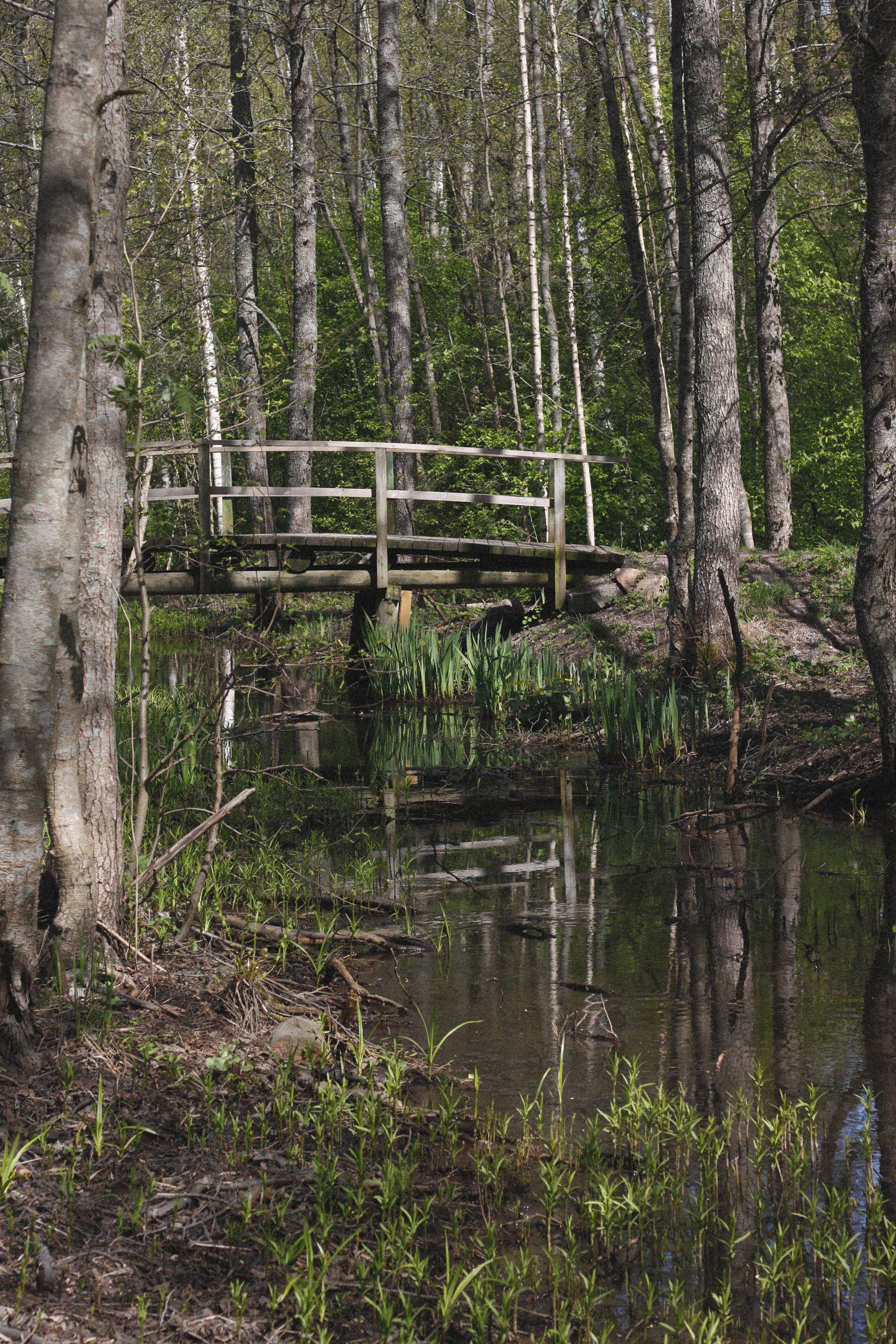
In August 2025, a rumour spread through Mellunmäki, in East Helsinki: a pipe had leaked at a construction site near the metro station, releasing wastewater into Mellunkylänpuro, the stream that threads through the district. The trout spawn in the stream was dead.
The knowledge of the damage spread during the annual river restoration led by The River Management Association Virho ry. Chairman Jouni Simola warned of the cumulative effects of nearby construction on the fragile ecosystem. Similar incidents have occurred before, most notably in 2009, when a discharge destroyed much of the stream’s newly restored trout population. Since Virho began reintroducing trout in the waters with the City of Helsinki in 2000, repeated releases of sand and fine solids from construction sites and other runoff have choked spawning gravel and suffocated fertilised roe, slowing recovery. The sources of these emissions remain unidentified.
Residents now fear further harm. The city plans new housing in Bredbacka, a nutrient-rich, shaded forest that shelters the stream. Under current proposals, the streambed—maintained and restored over decades by Virho and volunteers—would be relocated. “We should get environmentalists to climb the trees here,” one resident stated, voicing a shared anxiety for both forest and stream.
In Helsinki, local nature is tightly bound to disputes over urban development. Headlines from Mellunmäki and other renewal areas echo familiar tensions: Natural forest cleared for apartment blocks1; Homes for 2,400 residents planned in Helsinki woodland2; Light rail threatens local forest in Etelä-Haaga3. Over the past decade, local forest has become a focal point of environmental struggle, crystallising conflicts between residents and institutions over who governs urban space—and how.
These questions inspired Grassroots City, an art and research project examining how communities respond to a changing climate. Climate change is often framed as a technocratic issue managed by institutions, yet its consequences are felt most acutely at the local scale, where adaptation depends on everyday care and stewardship.
The project’s narrative throughline emerged in Mellunmäki, where real estate development, urban activism, and communal environmental work converge. Designated as one of Helsinki’s five urban renewal areas, the district faces profound change: housing for 2,500 new residents, densification around the metro, demolition of residential buildings, and expansion into surrounding forest. The proposed new neighborhood of Bredbacka would replace a recreational forest of high ecological value, prompting sustained local opposition.
The stream itself is equally at risk. Mellunkylänpuro rises in the Slåttmossen bog in Vantaa, fed by springs in shaded forest and along the motorway’s edge. It winds through several neighbourhoods before emptying into Vartiokylänlahti at the Baltic Sea.
Following its course sharpened our research questions: the stream’s past, present, and future reveal both local conflict and global entanglement. In Mellunmäki, it records human presence: construction runoff, dead trout, activist care, and the institutional view of rivers as mere lines on a map to be moved at will. Its currents echo James C. Scott’s insight that rivers, and streams like Mellunkylänpuro, reveal the consequences of simplifying complex systems, offering a lens onto life in the Anthropocene4.
***
As the UN Water Agency notes, climate change is, above all, a water crisis, expressed in floods, rising seas, melting glaciers, wildfires, and droughts5. Its effects are felt globally and in Finland: winters grow shorter and less snowy, summers hotter and drier. In Helsinki, torrential rain increasingly floods the city, while familiar species vanish and birdsong thins, signalling a shrinking web of life.
The ongoing decade leading toward carbon-neutrality targets in the 2030s has intensified concern for local nature. Growth-oriented urban development presses close to home, eroding forests and recreational landscapes in the search for buildable land. Local nature is particularly valued in suburban districts, where affordable housing sits alongside green space. Grassroots resistance is growing: an elderly Mellunmäki activist opposing a zoning plan threatening Bredbacka grove described it bluntly as “an environmental crime.”
In Finland, residents’ movements have not traditionally centred on environmental protection. Yet in Helsinki, defending local nature has emerged as a key form of climate resilience. Jaana Kanninen and Sanni Seppo’s Huuto kaupunkiluonnon puolesta6 (A Call for Urban Nature) documents communities rallying around nearby forests, showing how social proximity underpins socio-ecological transitions.
Local communities are often the first to respond when urban environments deteriorate. After Hurricane Sandy in 2012, New York based social movement Occupy Sandy mobilised aid more rapidly and effectively than many institutional actors, while the federally led Rebuild by Design programme was criticised for its slow, technocratic response. Such contrasts underline the importance of community-led resilience: climate impacts are lived locally, and adaptation must begin there.
Urban movements operate at many scales, from neighbourhood initiatives to city-wide campaigns addressing transport, water, air quality, and liveability. They are increasingly organised, sharing knowledge, building alliances with researchers, NGOs, and planners, and blurring the line between citizen and expert. Residents assert a right to shape their environments in ways institutional processes often cannot.
In Mellunmäki, a strong desire to shape the future of the neighbourhood and protect its nature is evident, even manifesting as hands-on grassroots stewardship. Residents attempt to engage closely with city-led renewal—drafting alternative zoning proposals, meeting planners and politicians, organising events, and caring for green spaces that are central to suburban life.
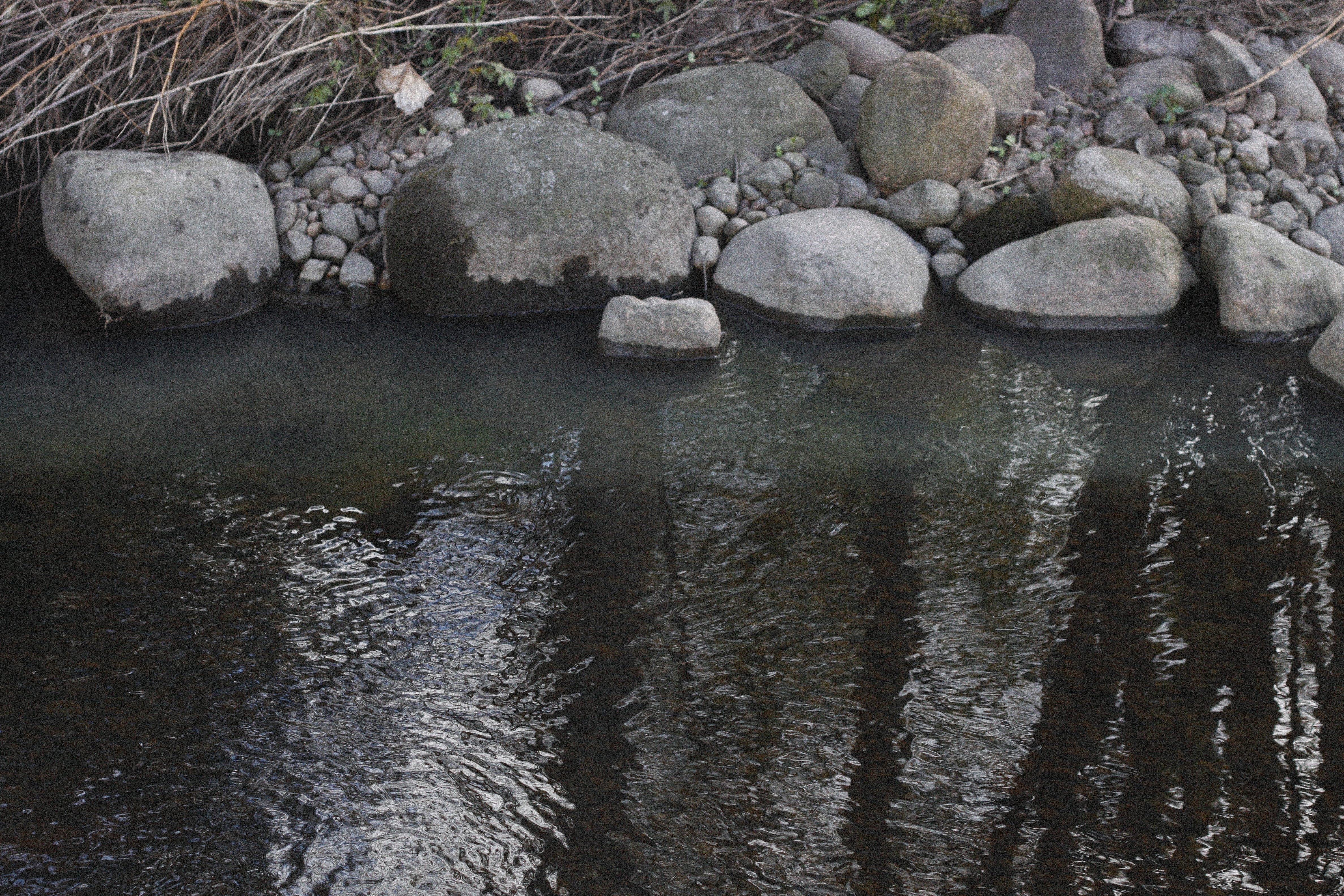
At the heart of these efforts lies Mellunkylänpuro. Like many urban waterways, it has been redirected and constrained, leaving lasting damage. Much of the stream has been redirected underground in pipes that were once framed as flood protection, but its effects on groundwater, ecosystems, and downstream flooding are now clear. In ecological terms, piping renders a stream at its most lifeless; indicator species such as trout cannot pass through many culverts and vegetation is non-existent.
Plans to relocate Mellunkylänpuro have sparked concern not only over ecological damage but also the loss of a cherished recreational landscape. The stream is layered with local history and human use: its waters have served for drinking, laundry, and, until the 1970s, wastewater disposal. For decades, it has also provided a vital recreational space, its water quality slowly recovering through the combined efforts of city authorities, associations, and residents.
Yet through decades of local care, Mellunkylänpuro has become the artery through which Mellunmäki’s future is imagined and contested. In a neighbourhood with limited access to other water bodies, it functions as both ecological and social spine, linking residents, walkers, kayakers, and anglers. For nearly three decades, Virho has led volunteers in restoring the stream, reviving trout populations, and improving water quality.
Once again, densification plans place Mellunkylänpuro at risk. Proposed relocation would follow a course the stream held roughly a century ago. Surveys suggest this would undo decades of ecological restoration, forcing the process to start anew. While residents have learned to live with the anthropogenic stream through reciprocal care—giving back as much as they take—the proposed design prioritises efficient land use and human recreation, opening and unshading the watercourse for new housing. Additional sections would be piped or opened near motorways, precisely where de-piping and shelter are needed to improve ecological conditions.
***
Streams are not inert lines on a map but living systems, entwining humans, other species, lakes, springs, and bogs. Mellunkylänpuro shifts with seasons, ice, and fluctuating water levels, continually reshaping its banks. Residents attuned to its currents witness climate impacts at close range. While contemporary stormwater strategies aim to slow and absorb water at its source, decisions about pipes and channels must begin with attention to soft infrastructure and the knowledge already embedded along the stream.
Neighbourhood communities are central to climate adaptation and urban resilience. At this scale, cooperation remains flexible and responsive. As Emily Talen notes, neighbourhood-level governance supports everyday sustainability from water conservation and energy efficiency to recycling and urban food production7.
Through care and collaboration, communities cultivate forms of both direct and indirect urban activism, building the capacity to shape development. On the banks of Mellunkylänpuro, those restoring the stream experience exposure firsthand—the cold currents, spring rains, summer heat, droughts, and winter floods. Hamilton, Zettel, and Neimanis describe this practice as weathering: as infrastructure attuned to bodily difference, exposure, and climate vulnerability8. Such embodied labour reveals what it truly takes to live with a changing climate. Resilience in Mellunmäki is not a policy phrase; it unfolds in daily, hands-on work and shared responsibility.
Mellunkylänpuro shows how local groups take responsibility for their surroundings, anchoring identity in place. Physical labour and situated knowledge operate as vital forms of soft infrastructure. In the climate crisis, these networks are not supplementary but essential, sustaining both ecological care and the social organisation needed to endure change. Instead of investing in expensive hard infrastructure, such as flood barriers and rainwater sewer systems, more investments should be made into building resilient communities that can act in times of crisis.
***
Grassroots City examines how communities support climate adaptation at the local scale. We interviewed five Finnish actors actively engaged in managing their environments, from volunteering and invasive species removal to zoning advocacy and community-based data collection.
Across the interviews, a shared concern emerged: the lack of meaningful participation in urban development. Local communities and organisations are often presented with plans that appear final, leaving little room for the adjustments that local knowledge would offer. Our research suggests that effective involvement requires consultation from the outset; recognition of residents’ and long-standing institutional knowledge, such as that held by Stara (Helsinki City Construction Services); and acknowledgement of the ongoing, often temporary, interventions maintained by local groups—such as Virho’s stream restoration work or Villi Vyöhyke’s biodiversity projects.
We also worked directly with the Mellunmäki community, attending meetings with Mellunmäki-liike and city representatives. In August 2025, we volunteered with Virho at Mellunkylänpuro, witnessing how sustained local care supports urban ecosystems. During Mellunmäki Neighbourhood Day, organised by the area’s metro station with Mellunmäki-liike, Kalliolan Setlementti, and ME-talo, we facilitated a workshop in which residents shared experiences of extreme weather events using a large game board.
The project’s final publication traces urban environmental activism through the story of Mellunkylänpuro. The stream becomes a lens through which to view how communities care for their surroundings, prepare for extreme weather, and respond to environmental crises. As climate change accelerates, community-led action—alongside technical and institutional measures—offers vital adaptive capacity. Grassroots City seeks to reframe public debate in this critical decade, arguing that social and ecological resilience must be integral to urban development.
This article is the first in a series of texts documenting the findings of Grassroots City. You can read more about the project on our website: https://vokal.fi/
References
Pietiläinen, J. (2023). Asukkaat järkyttyivät: Helsinki tuhoaa ikiaikaisen kallion ja virkistysmetsän Vantaan rajan tuntumassa – “Tämä on peruuttamatonta”. Vantaan Sanomat 19.10.2023. Available: https://www.vantaansanomat.fi/paikalliset/6288520 Referenced 15.11.2025.
Salomaa, M. (2024). Katso uudet kuvat: Metsään Helsingissä asuntoja 2 400 asukkaalle. Helsingin Sanomat 9.10.2024. Saatavissa: https://www.hs.fi/helsinki/art-2000010749157.html Referenced 15.11.2025
Bäckgren, N. (2021). Helsingin pikaraitiotiesuunnitelma uhkaa jyrätä lähimetsän Etelä-Haagassa – Asukkaat surevat kallioiden, metsän ja pikkulasten puolesta. Helsingin Sanomat 16.4.2021. https://www.hs.fi/pkseutu/art-2000007922128.html Referenced 15.11.2025.
Scott, J. C. (2025). In Praise of Floods. Yale University Press. Scott writes: Rivers are “good to think with.” For those interested in the Anthropocene and the Great Acceleration, rivers offer a striking example of the consequences of human intervention in trying to control and domesticate a natural process, the complexity and variability of which we barely understand. […] From the Roman aqueducts to the Han Dynasty’s river masters to the canal bubble of the late seventeenth century in Europe, enormous resources were devoted to the management of rivers for political and economic gain. If, then, we are interested in the history of human intervention into complex natural systems to turn them to human and state purposes, the example of river management offers an ideal metric for the Anthropocene alone.
UN‑Water, ‘Water and Climate Change’. Available at: https://www.unwater.org/water-facts/water-and-climate-change Referenced 15.11.2025.
Kanninen, J., Seppo, S., & Ijäs, H. (2022). Huuto kaupunkiluonnon puolesta. Vastapaino.
Talen, E. (2019). Neighborhood. Oxford University Press.
Hamilton, J. M., Zettel, T., & Neimanis, A. (2021). Feminist Infrastructure for Better Weathering. Australian Feminist Studies, 36(109), 237–259.